What’s the thing that really fires you up?
I love the process of creating an exciting photograph. I’d define exiting as creating something that reaches beyond my body of work and is largely unexpected. This is most possible or viable when I’m shooting artwork, and the brief for the final photograph is open to my interpretation.
I find deep engagement in shooting my commercial photographic work, but the parameters are entirely different. The primary intention of commercial photography is to fulfil the specific objectives of an advertising photograph. These photographs have to fit neatly into an existing marketplace, set a tone for the product, attract a specific audience, and convey a high level of storytelling. To encompass all of these objectives into a compelling image requires considerable problem-solving; it’s a highly creative process, but with outcomes that are largely predetermined.
The complete freedom of making photographic artworks doesn’t ensure a high level of creativity, but offers a broader scope in what the final work may become. I’m trying to make photographic artworks that are more than strong enough to stand alone, but carry a stylistic signature when shown together.
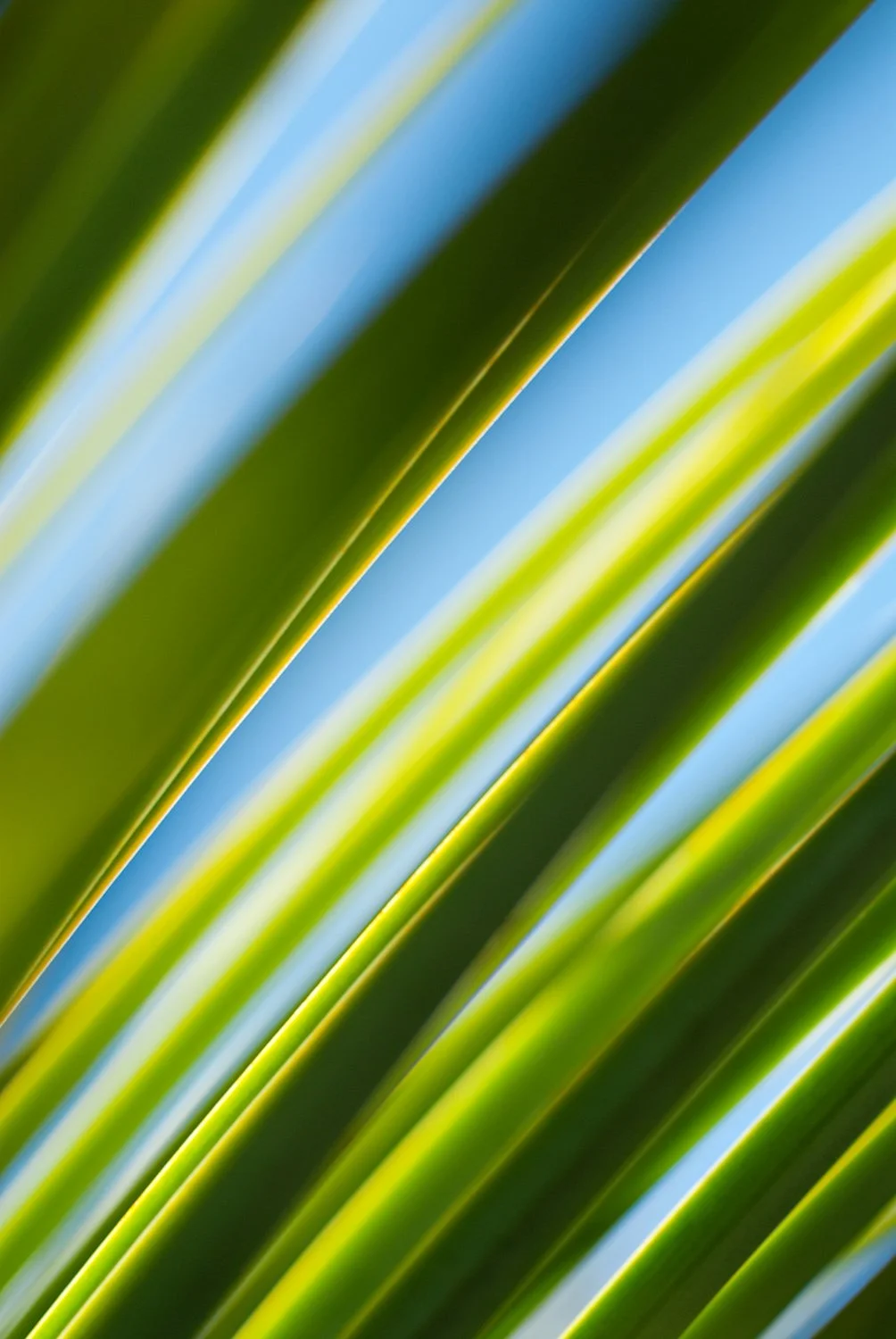
I manage complete freedom by having firm parameters around the equipment I allow myself to use to make the work. I’ve taken this to an extreme, shooting virtually all of my artwork in the last thirty years in shallow depth of field, with either a wide angle lens or with a macro lens. I’ve created two distinct and cohesive bodies of work that have continued to evolve for over thirty years.
Shooting an entire body of work for an exhibition using one lens ties the images together and ensures that I’m not bouncing around stylistically. My most recent exhibition, Nature Portals, was shot using a 60mm 2.8 macro lens, at around a 1:1 magnification, with the aperture wide open. Each subject is about 7cm from the lens, and I can see a viewing area of about 35mm across. The problem-solving within these parameters is what I define as creativity. When all of the images are seen in the same way, the job is then to use this limitation and experiment with what can be seen from this viewpoint. How do you constantly return to the same set of ingredients and continue to make different-tasting food?
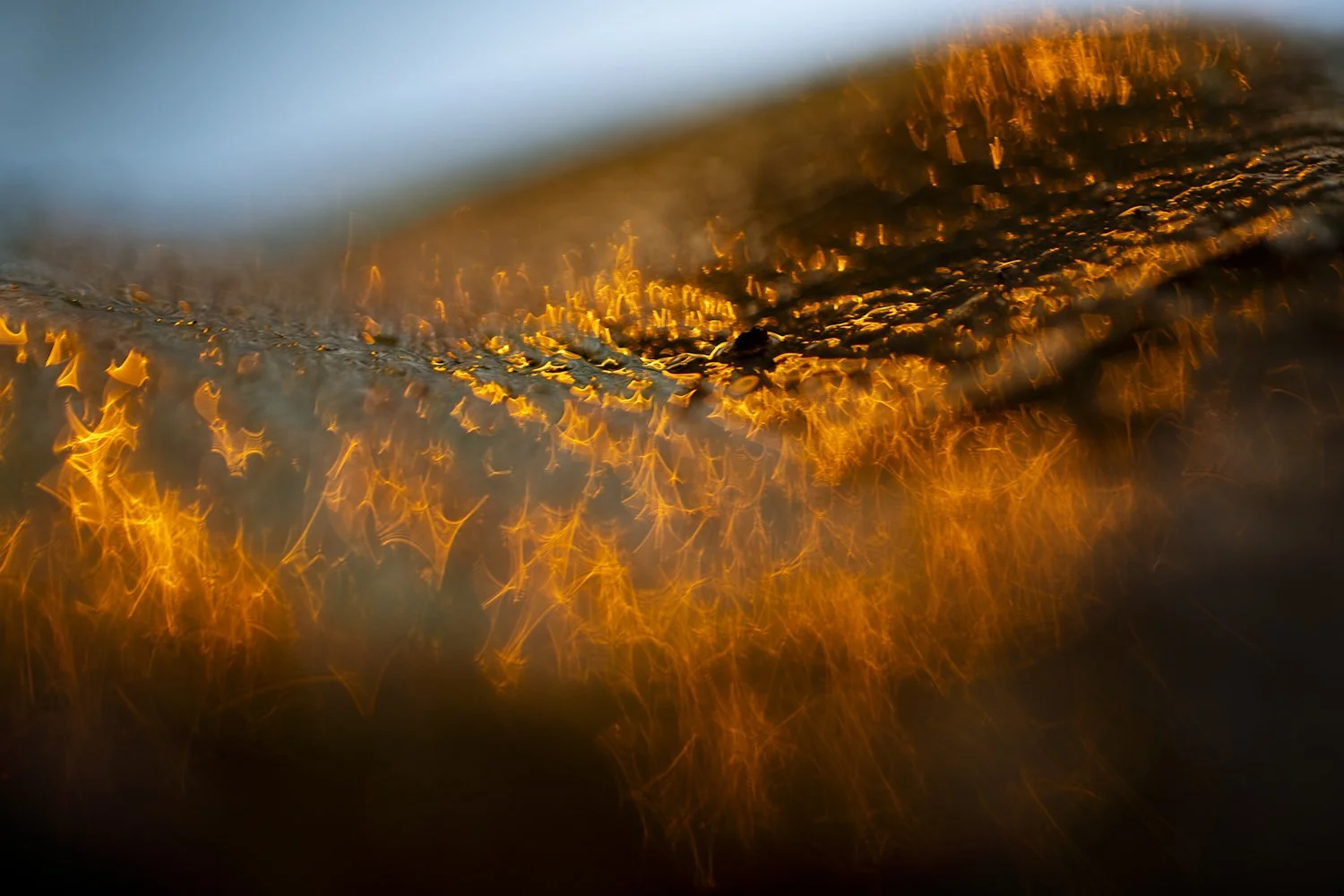
My aim is to make images that push beyond what is expected from a “normal” sense of sight. I’m trying to make work that feels inviting but also ethereal. I’ve stumbled on some amazing techniques, but I know that a fancy effect is not enough in its own right. It needs to be incorporated in a considered, interesting and balanced way to integrate into a cohesive finished photograph.
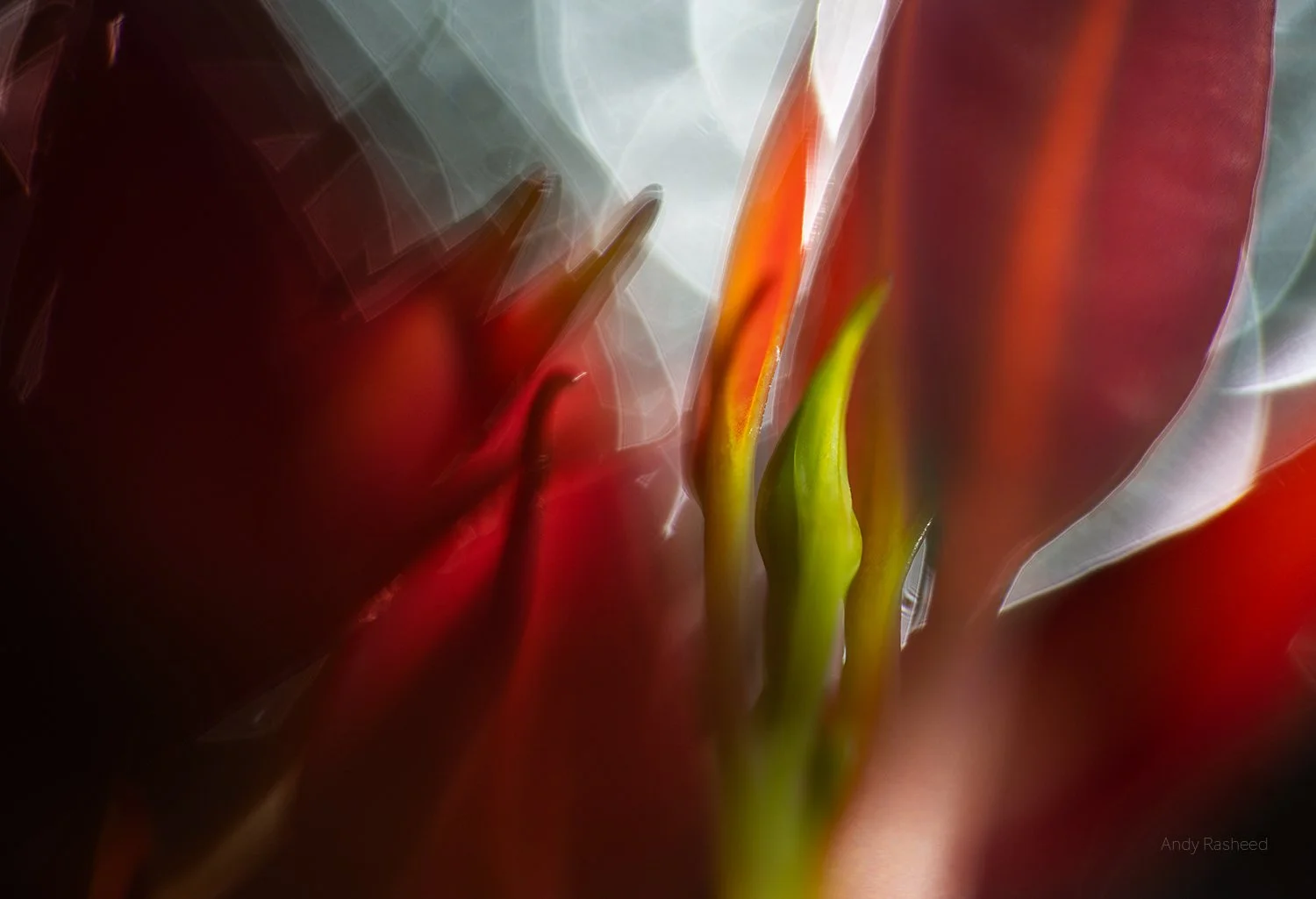
I’m interested in the melding of colours and the aberrations created through the way that the camera lens distorts light as it travels through the various glass elements. The surfaces of plants and flowers will break up light in some very intense ways under specific lighting events. For some of my artworks, the plant is the colour and the form of the photograph, but the light is the primary subject. I’ll use the plant as the surface on which to create the aberrations and spectral breakup in light, but the light is the real star of the photograph.
With extreme shallow depth of field photography, it is possible to create crisp edges in addition to the point of focus. Sharp edges can occur where strong colours meet, and a phenomena, circles of confusion, also called blur circles, make circular shape with an edge. These are pinpoint highlights that swell as they get further out of focus. In macro photography, if I have the subject in the right position, shooting straight into the sun, the subject will cast a focused shadow on the chip (film plane).
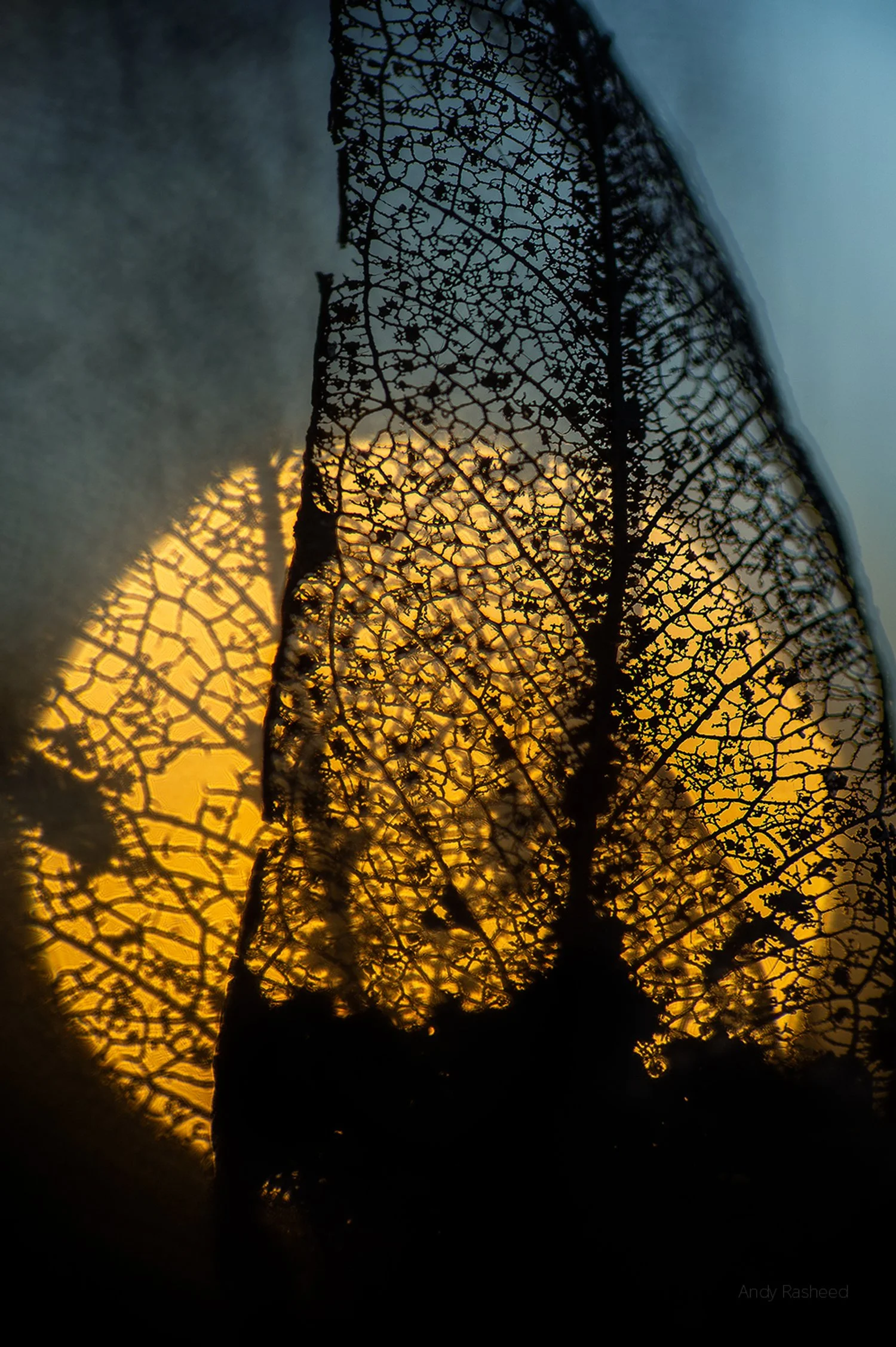
Abstract macro photography of nature has been a constant source of great joy over my adult life. I feel a huge sense of discovery and excitement when a combination of light, balance and colour coalesce in my view finder to reveal something unexpected. After so many years of observing plants through magnification, it takes a special photograph to really fire me up. But when I find one, it feels like a tiny miracle, and proof that there is infinite potential for me to make, learn and grow as an artist.
I am an artist, not because I was trained to be or because I was given permission. I am an artist because I have constantly shown up to make new work. I make photographs that can be identified as photography that I would make; I’m making that work for my enjoyment and my engagement. It’s not for external praise, though it’s an incredible feeling when I can bring someone to tears with a photograph. It’s not for the financial recompense, though that too is a wonderful by-product when it happens. It’s because I can’t put this down. I’ll set out with my camera, without any guarantee that I’ll come back with anything of real merit, but I’ll engage with this process just for the joy of being able to explore. Yes, it can be intimidating, frustrating and challenging trying to finish a body of work to a specific standard, but I feel the commitment required of me has made my life better. I have work on my walls that I shot over twenty years ago, and they still feel potent; I still want to look at them. I’ve pushed myself beyond what I believed I could achieve, and I’ve made some wonderful connections with like-minded folk. It’s a process that I primarily engage in for the joy of doing, but when I land that special photograph, I am lucky enough to have something that I can share.