
Insights into Industrial Photography
Location photography of any sort is largely about improvising within a set of less-than-ideal circumstances. Regardless of the challenges the location presents, my task is to create communicative photographs that are beautifully lit, well-balanced, and engaging.
Commercial Industrial photography holds a unique set of challenges and many limitations. The premise is to create strong commercial photographs on location at a worksite where I have little control over where things are placed.
Worksites are generally a bit grubby and can be visually cluttered. The space is set up for industry, not photography. Though they are more than fit for the function they are built for, there is always dust and grime, as well as possible hazards such as material offcuts and chemical residue. I wear clothes appropriate to the site, as it’s not uncommon for me to shoot from ground level to emphasise the scope of an operation. I am routinely on the floor…
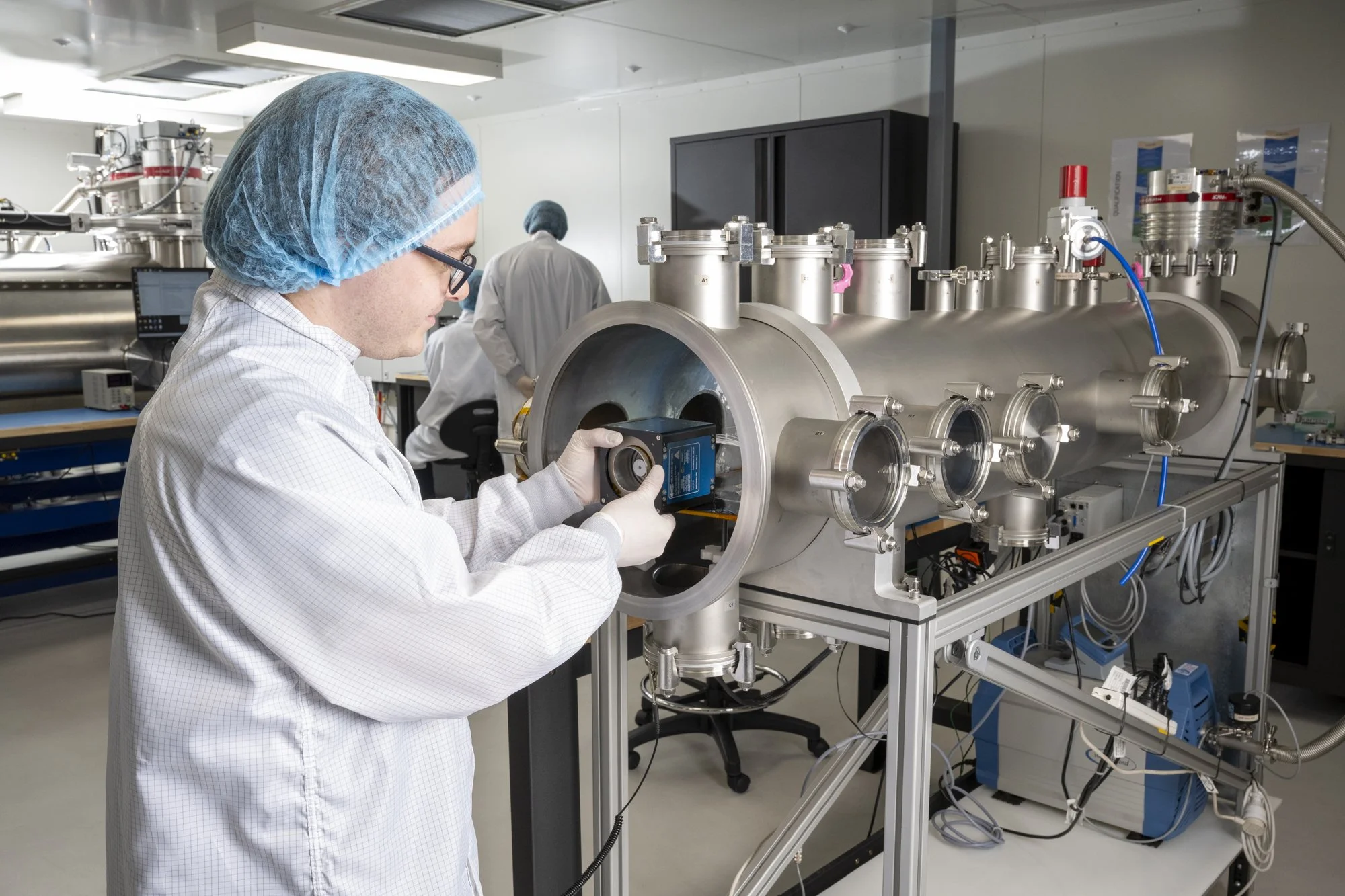
Some industries are spotlessly clean. I’ve worked in hermetically sealed laboratories for the space industry, where, before I could enter the site, my kit was cleaned, and I changed into extensive PPE to enter the workspace. Everything is shiny and clean, which makes any blemishes on the equipment really stand out. This is just one of the many reasons post-production is so crucial in producing refined commercial photographs. I’m often removing objects and blemishes in post to simplify the background of images.
Some of the positives of Industrial photography are the things that make it challenging. The sheer scale of operations can make for imposing and dynamic subject matter, and can make it hard to showcase specific operations. There are often vehicles moving about, which I need to be aware of, but I can also use their movement as a feature in photographs. I can also place a vehicle in a specific part of the frame, either to shield an area or to simplify a composition.
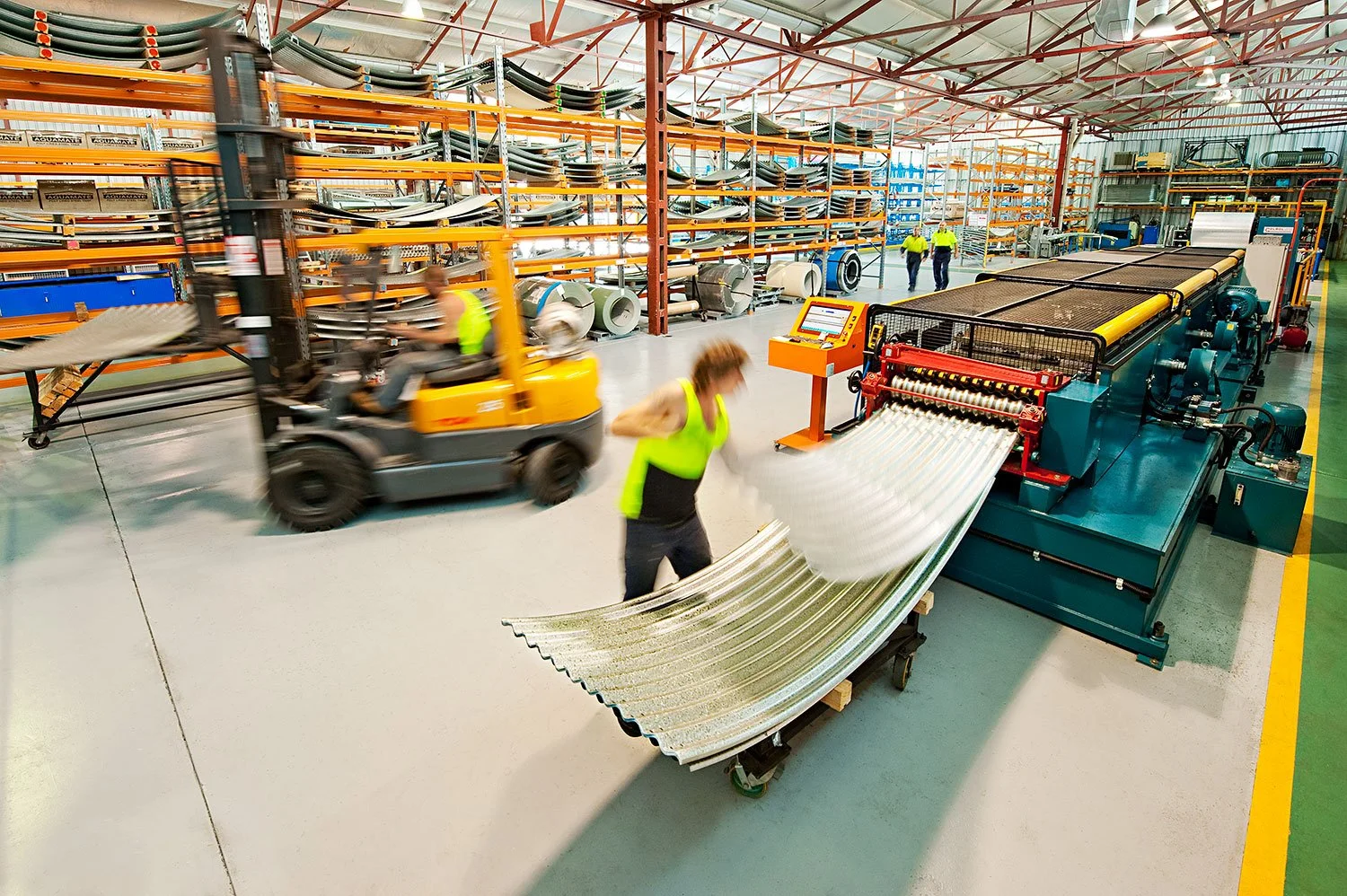
Industrial photography has great potential for strong storytelling. The scale and quality of the equipment and tech, the number of people on site, their ages, their attire and the inclusion of specific processes all contribute to the story of activity.
It’s important that I’m chaperoned by an expert when doing a shoot. I need assistance in real time to be sure that the images we are making represent best practice and that everyone in the photographs is in the correct clothes and PPE. I must be certain that the photographs made can stand up to scrutiny by an expert in the field.
One particular challenge is in trying to make a beautifully lit image in a floodlit space. Factory lighting is not pretty, and the various floodlights in a space may vary in colour. These lights are often combined with some natural light, which is a different colour again. Colour correction is another way that post-production is a saviour.
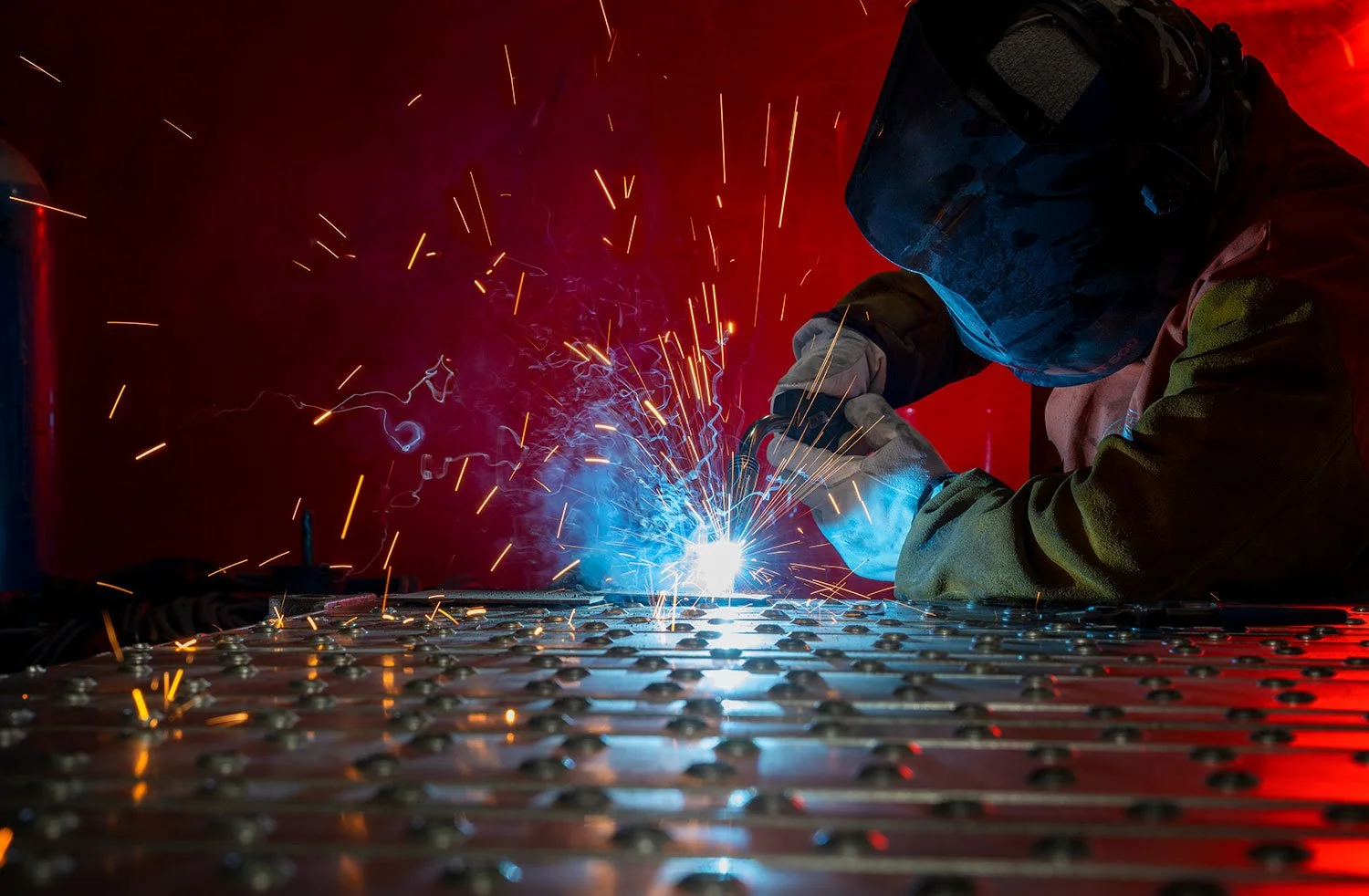
The brief for the image below was to get a strong photo of a person welding. The location was overly bright for the long-ish exposure required to show the movement of the sparks, and the background in any direction was distractingly busy. I utilised a nearby red screen to try to simplify the composition and tone down the ambient light to help with the exposure. Given that the screen was translucent, it seemed obvious to try using it as the main light source by backlighting it. What was a fairly monotonal and complicated composition instantly became full of vivid colours, interesting reflections, all framing an explosive weld.
The final photo is high in drama, simple to read, and communicative.
I love that through my career as a photographer, I have had personal tours and in-depth explanations of a vast array of industries, and then been able to offer my interpretation of these operations through my photographs.
Because every environment and business is so different, I am grateful to have such a breadth of experience in dealing with all that a random location can throw at me. It can be quite an exercise, from art directing on the fly, contending with mixed lighting, tricky compositions and orchestrating groups of people at once.
The fact that most people don’t have exposure to the machines and practices employed to make even simple objects means that I am pulling back the veil and allowing some insight into these processes through my photographs.
Although it’s not always obvious, a strong photograph is always waiting for me; I just have to find it.